Personal Growth Through Indie Filmmaking
Of course, a period of planning a film and getting things down on paper is essential. However, at some point, you have to take the leap and make it happen. Also,, if you’re choosing to make a no-budget film, you need to sharpen a variety of skills to see it through, not just filmmaking ones.
1. Taking the Leap
Planning is crucial, but eventually, you have to jump in and start making your film. This leap from planning to action is a necessary step in bringing your vision to life. Waiting for the stars to perfectly align is futile, also, a lot of other helpful aspects will not present themselves until after you start making your film.
2. Sharpening Your Skills
Making a no-budget film requires you to develop and refine a range of skills, including non-filmmaking ones. Embrace this learning curve as part of the journey, recognising that each challenge you overcome will contribute to your growth.
3. Personal Growth Beyond Filmmaking
By pushing yourself outside your comfort zone and seeing the project through, you create opportunities for significant personal growth. This experience extends beyond filmmaking, offering insights and development in various areas of your life and ones you can also use in other non-filmmaking ventures. Embrace the process not only for its impact on your film but also for the broader growth it can inspire.
Final Thoughts: While planning is crucial, eventually, you must take action to make your film a reality. Embrace the process as an opportunity for growth, both in your filmmaking skills and personally.
Do I Need a Professional-Grade Cinema Camera to Make a Film?
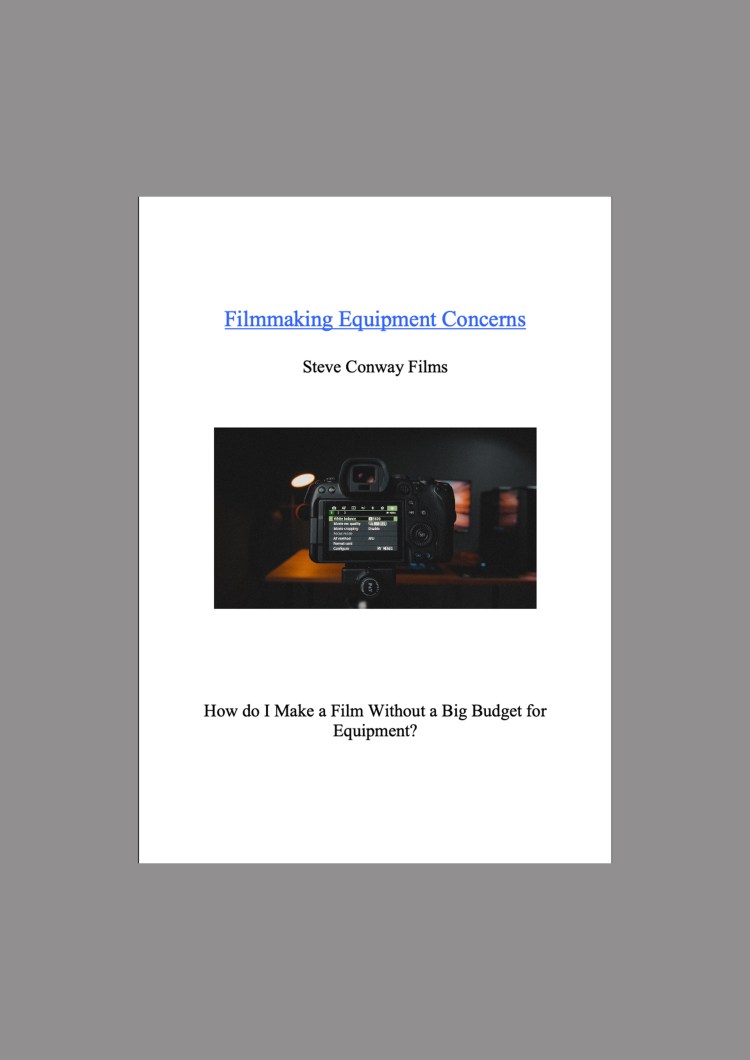
Like most dedicated filmmakers, I shared similar equipment concerns when I set out to create my first feature-length film. This topic is a common point of discussion among fellow creators. Dive deeper into equipment considerations by downloading my free, concise 4-page PDF guide, available here.
More about why I made a no-budget film
Share This Post for Others Below
 Steve Conway Films